Sunset in Garissa
Garissa Town is the headquarters of Garissa County, and the gateway to North-Eastern Kenya.
Going to Garissa by road, will initially send you through Thika Road. Perpetually jammed over the past decade, this road is currently being upgraded into a 12-lane superhighway. This prestige project of president Mwai Kibaki and his coalition partner, Prime Minister Raila Odinga, will doubtlessly be written into Kibaki’s legacy when he retires in 2012 (did someone say “Kibaki Highway”?).
Shortly after Thika, the landscape changes. From the green, crowded surroundings of Nairobi, you suddenly enter the hilly, semi-arid and sparsely populated Ukambani (land of the Kambas).

Garissa - "Last mountain before Hargeisa"
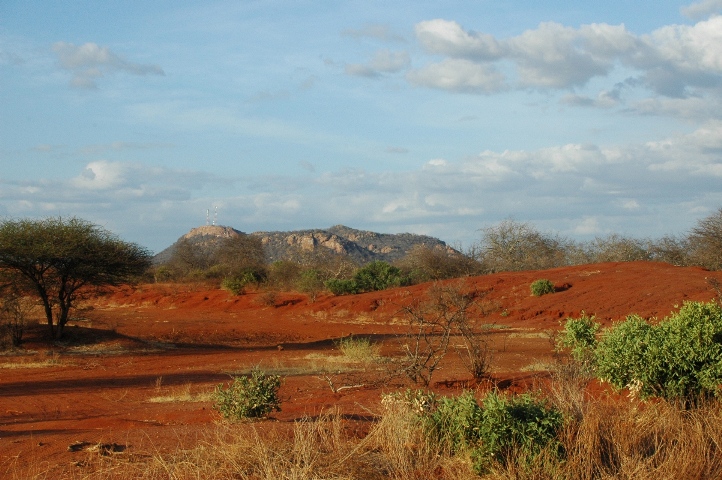
After Mwingi, the home town of Vice President Kalonzo Musyoka, the landscape gradually gets flatter and more arid, where dry riverbeds bear witness of the seasonal droughts. Eventually, you reach what locals emphasize is the “last mountain from here to Hargeisa”, and after that, the landscape turns completely flat, monotonous, and densely covered with low bushes. The last strech of a few km is the only part where the road is seriosuly potholed, so when you get there, you know you are close. The police checkpoint by the river is the “entrance portal”, and once past it, there you are!

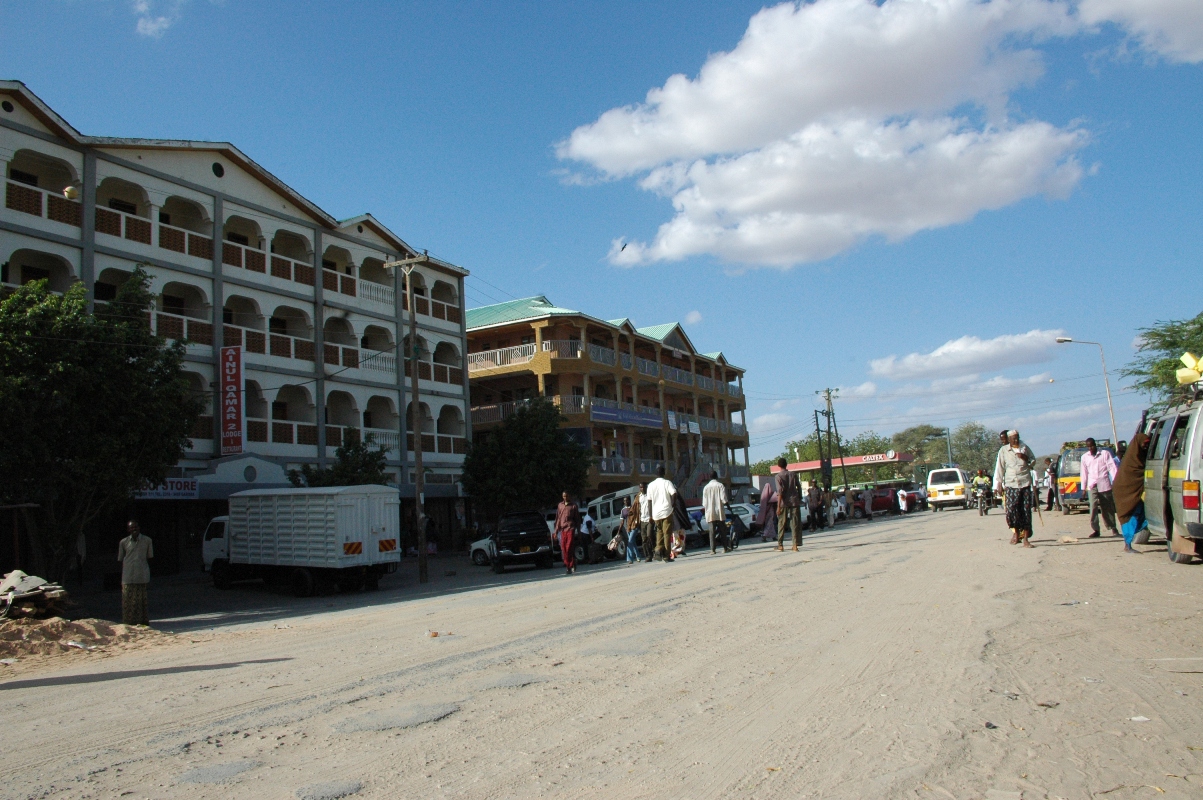
Garissa town centre
Garissa Town is a peaceful and quiet place, that takes great pride in its official status as the safest in Eastern and Central Africa. It is mainly place where the pastoralists living in the surrounding areas come in to dobusiness during the day, and then go back home. As a consequence, Garissa Town doesn’t offer urban attactions, night clubs or wining and dining. That is not what people would go there for in the first place, as the top attractions are outside town. There are plenty of small shops, though, and every Wednesday, the town is bustling with life during the Market Day. Garissa is the unofficial capital of Kenya’s Somali community, and a showcase of their culture. It’s probably the best way to experience the Somali way of life without crossing into Somalis proper – a journey few non-Somalis without a death wish would consider.
Enter into a conversation with any local, and the friendliness and hospitality, key to the Somali culture strikes you. The general mood is hectic and energetic, and any interaction lasting more than a few minutes is generally accompanied by a cup of boiling hot spicy tea, with lots of milk and sugar. A very remarkable difference between the Somali parts of Kenya and the rest of the country, is time observance. In most of Kenya, especially outside Nairobi, things go by AST (African Standard Time). Not so in Garissa, where time consciousness is at a North European level.

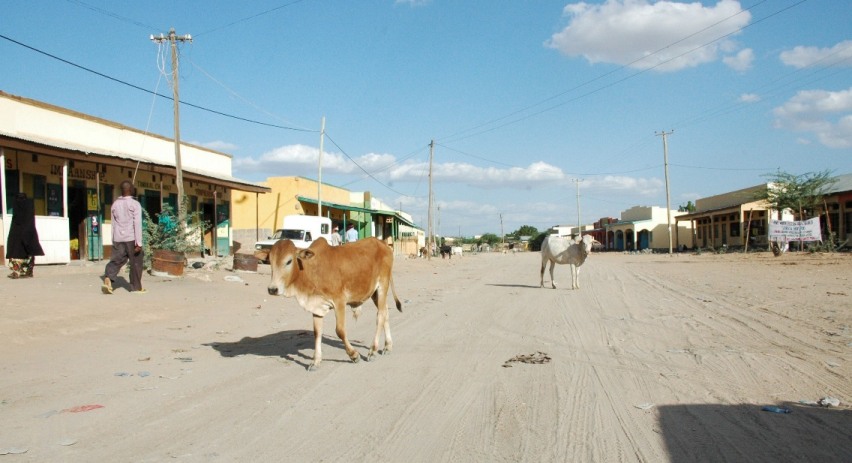
Cows roaming the streets in the outskirts of Garissa Town
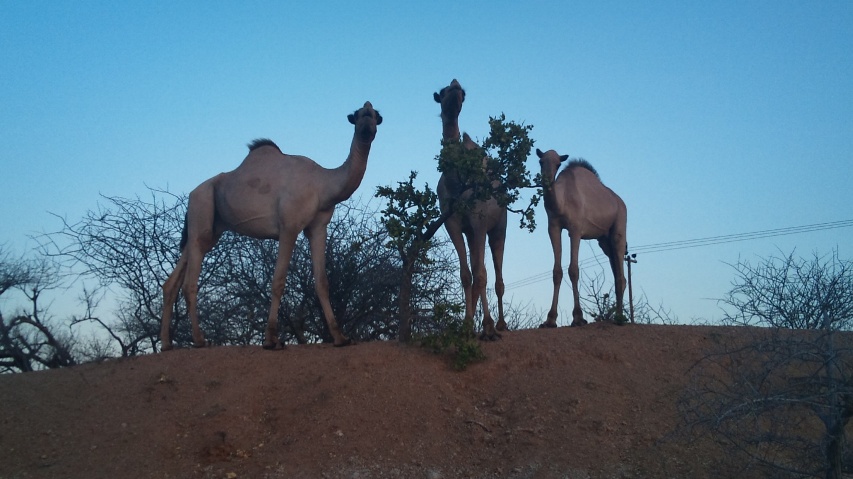
As most of the population in the region are pastoralists, livestock is a prominent aspect of the town and its surroundings. Cows, camels and goats roam the streets, and fresh, delicious meat is dirt cheap. In addition to the town’s current abattoir – a cornerstone of the local economy – a new, high-capacity one, is being planned with the aim of turning Garissa into a global meat exporter.
There are 2 very nice hotels: the Nomad Palace and the Almond Resort. These are completely up to international standards, yet nicely priced (€24 per night at the Nomad Palace). They also have nice restaurants with amazingly tasty steaks and meat stews.

Camels "dining" around a bush in the outskirts of Garissa
The fact that Garissa outclasses far bigger, and assumingly more cosmopolitan town in Kenya in terms of hotels, can probably be seen in connection with the Somali business spirit. Aggressive entrepreneurialism is a key component of the culture, and that is probably the reason why the economic impact of the Somali community is increasingly being felt all over Kenya. 
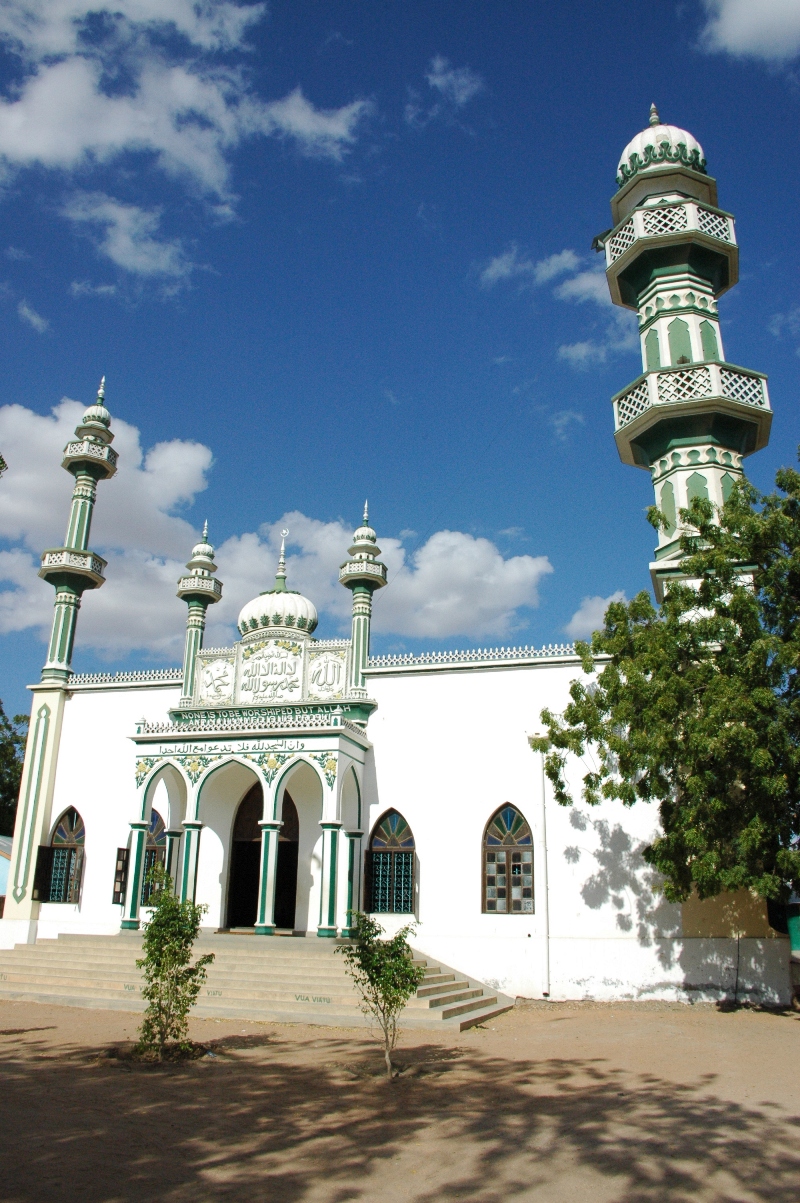
Garissa Grand Mosque
Garissa is an overwhelmingly muslim place, crowded with cute little mosques. None of the quality hotels serve alcohol, or even allow guests to bring it, and of all the gin joints in all the towns in all the world, you’re not likely to walk into one here. I did see a small place advertising the sale of booze in an outskirt of town, but clearly, this is no place for the thirsty traveller. Those are not in Garissa’s target group in the first place, so if you plan on rocking all night, you might want to consider Ibiza instead.

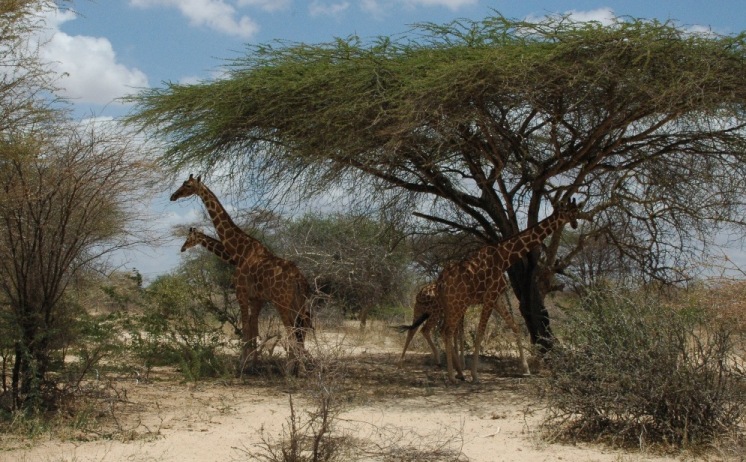
Garissa Giraffe Sanctuary
Tourism is the new strategy for Garissa as a second leg for the local economy, in addition to livestock. With the introduction of local governments in Kenya as a result of the new constitution, Garissa County looks set to invest aggressively in attracting visitors.

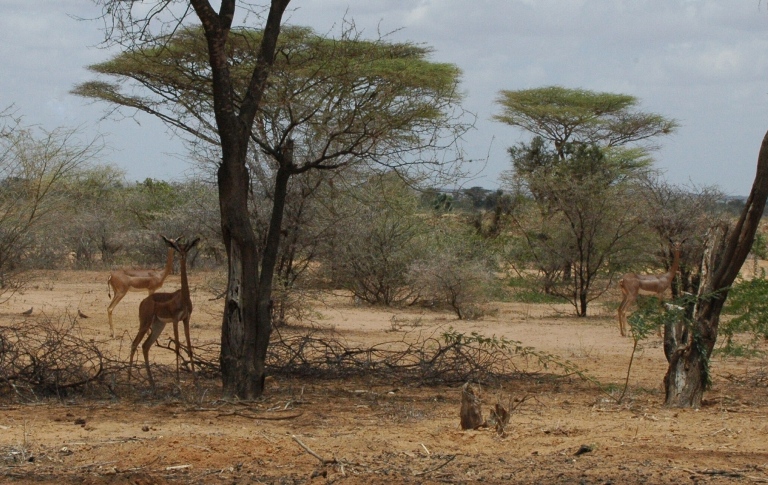
Gerenuks (Giraffe Gazelles) in the Garissa Giraffe Sanctuary
There is already the Bouralgy Giraffe Sanctuary, with a growing population of Rotschild giraffes. Other animal species in the sanctuary include the rare, long-necked Gerenuk (aka. “giraffe gazelle”), that only exists in this part of East Africa. The park also encompasses smaller populations of 26 other species of game animals, and more than 450 bird species. It is just 10 minutes south of Garissa town, along the green river belt, lush with acacia trees. Built and maintained by local visionaries, the park has suffered from the lack of support by the central government and the meagre resources available to previous local authorities. With the new, strengthened local governments in Kenya, the giraffe sanctuary is already being targeted for significant upgrading.

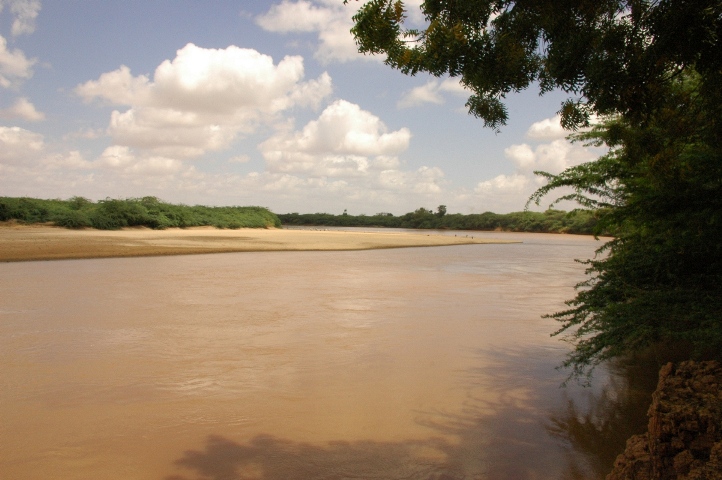
Tana River in Garissa
Tana River, one of the major ones in Kenya, runs just outside Garissa town. Crowded with snakes and crocodiles, it has a great potential to attract adrenaline-seeking travellers, ready to pay what it costs to get close to the dangerous animals in a boat. Unfortunately, there was no such option available during my visit, so I hope someone from the soon-to be-created Garissa County tourism board is reading this, and acts on it by the time I return!
You don’t have to travel far outside Garissa before you find yourself in the wilderness. The surrounding landdcape of dry shrubs and bushes, and coarse sands, are one big pasture for thousands of camels, goats, cows and donkeys. Occasionally, you will also spot small villages of semi-permanent structures made from mud or straws, that are the homes of the many pastoralist families inhabiting the area. Considering the booming tourist business by North African bedouins, offering camel rides in the desert, and meals and shelter in tents, expect similar packages to be offered to travellers in Garissa in the near future. The combination of safety, good infrastructure and massive cash inflows from the Somali diaspora has made Garissa the fastest-growing town in Kenya. The impressive thing is how this growth has been achieved without a rise in crime. The place still has the atmosphere of a cosy and quiet small town, with no highrises and only a few multi-storey buildings. That is likely to change in the coming years as the growth continues. As tourism is a rather new concept being promoted, it is still very much “work in progress”, but with great potential. Local forces are agressively pushing to promote this new source of growth. The director of the Giraffe Sanctuary even came with me in the car, for a personal guided tour when I visited the park! Expect to see camelback desert expeditions with village sleepovers, and crocodile sighseeing river cruises being marketed massively in the coming years. I know for a fact that I will be among the first to try out those activites once they are launched!