And I'm not saying this to vindicate my stand on the occupation of Somalia by Kenya's Army.
Showing posts with label Business. Show all posts
Showing posts with label Business. Show all posts
Friday, November 11, 2011
The Cost of War; Trade Slump in Garissa
It's neither the Politicians nor the Generals that pay the price for war. It's rather the citizenry that is already suffocated by inflation and scarcity.


Thursday, May 19, 2011
Nairobi Star: Garissa Boasts of the biggest Livestock market in East & Central Africa
According to Interpol, Garissa town is reportedly the safest town in East and Central Africa. The pastoralist town added yet another feather in its cap for having the biggest livestock market in East and Central Africa.
The 5.38-hectare market which is as old as Garissa town started off as a meeting point for barter traders before gradually developing into the renowned livestock market. The market receives livestock from Kenya and other neighbouring countries like Somalia and Djibouti.
Among the animals paraded for sale include cattle, camels, goats and donkeys. Of these, the cattle are the fastest moving commodity thus the huge market is generally referred to as 'Soko la Ng'ombe'.
Wednesday is the official market day of the week. By eight o'clock in the morning, the market is fully packed and is a buzz of activity with people from all walks of life trying to haggle for a fair price.
Osman Dubat, 70, from Mogadishu is one of them. His greatest intent this particular Wednesday is to buy more cattle for his ranches. When we meet, he is in deep negotiations with Nkaiseri Ole Tipis from Kajiado Central. "I have been doing this for the last 20 years, I always come and buy the cows at a lower price before selling them at higher one. I am a butcher so after I buy them, I fatten them at my ranches then slaughter them for sale."
Another determined trader Ibrahim Farah from Djibouti admits that he had been camping in Garissa four days prior the market day to offload his 300 head of cattle. "With the ongoing drought which is being experienced in some parts our country, I saw no need to continue keeping this number of animals only to lose them through drought. I decided to bring them to this market because in Djibouti we don't have a big livestock market like this one."
During the high season, over 2,000 head of cattle gets traded off at the market. This number makes the city council Sh350, 000 in market fees. "For each donkey and every head of cattle we charge Sh160, while for camels its Sh300 and Sh40 per goat and sheep. This money we collect helps us run our business as a council thus we are able to improve our services to the people of Garissa," revealed Garissa Town Clerk Erastus Karani.
The town clerk however says that the council still faces its fair share of challenges including neighbouring communities trying to encroach the market land. Through the Kenya Municipal Programme, the council is now making plans to put up a perimeter wall around the market to remedy this problem. "We also intend to put up a shed for the traders and extra toilets to cater for the thousand plus people we admit. The water troughs also need to be replaced as they are worn out."
According to another government official David Cheruiyot who serves as the Garissa District Livestock officer, an abattoir needs to be set up. "We have a big number of weak animals that die in the market. The construction of this abattoir will go a long way to help create another source of income for these animal owners because currently when the animals die, they get disposed off."
Post taken verbatim from Nairobi Star
The 5.38-hectare market which is as old as Garissa town started off as a meeting point for barter traders before gradually developing into the renowned livestock market. The market receives livestock from Kenya and other neighbouring countries like Somalia and Djibouti.
Among the animals paraded for sale include cattle, camels, goats and donkeys. Of these, the cattle are the fastest moving commodity thus the huge market is generally referred to as 'Soko la Ng'ombe'.
Wednesday is the official market day of the week. By eight o'clock in the morning, the market is fully packed and is a buzz of activity with people from all walks of life trying to haggle for a fair price.
Osman Dubat, 70, from Mogadishu is one of them. His greatest intent this particular Wednesday is to buy more cattle for his ranches. When we meet, he is in deep negotiations with Nkaiseri Ole Tipis from Kajiado Central. "I have been doing this for the last 20 years, I always come and buy the cows at a lower price before selling them at higher one. I am a butcher so after I buy them, I fatten them at my ranches then slaughter them for sale."
Another determined trader Ibrahim Farah from Djibouti admits that he had been camping in Garissa four days prior the market day to offload his 300 head of cattle. "With the ongoing drought which is being experienced in some parts our country, I saw no need to continue keeping this number of animals only to lose them through drought. I decided to bring them to this market because in Djibouti we don't have a big livestock market like this one."
During the high season, over 2,000 head of cattle gets traded off at the market. This number makes the city council Sh350, 000 in market fees. "For each donkey and every head of cattle we charge Sh160, while for camels its Sh300 and Sh40 per goat and sheep. This money we collect helps us run our business as a council thus we are able to improve our services to the people of Garissa," revealed Garissa Town Clerk Erastus Karani.
The town clerk however says that the council still faces its fair share of challenges including neighbouring communities trying to encroach the market land. Through the Kenya Municipal Programme, the council is now making plans to put up a perimeter wall around the market to remedy this problem. "We also intend to put up a shed for the traders and extra toilets to cater for the thousand plus people we admit. The water troughs also need to be replaced as they are worn out."
According to another government official David Cheruiyot who serves as the Garissa District Livestock officer, an abattoir needs to be set up. "We have a big number of weak animals that die in the market. The construction of this abattoir will go a long way to help create another source of income for these animal owners because currently when the animals die, they get disposed off."
Post taken verbatim from Nairobi Star
Wednesday, May 11, 2011
Breaking News: Al Waqaf Ablaze
One of the worst fires in a very long time is raging atop one of Garissa's most iconic buildings and at the heart of the city's business district. Al Waqaf Quran House is ablaze and because of the city's lack of fire engines and trucks nothing has been done about it.
The fires posses the grave risk of spreading to nearby buildings and causing much bigger damage. So far there have been no fatalities reported. The situation is very fluid hence much of what I'm reporting is based on first hand reports (from readers and fans) whose veracity I cannot vouch for.
As much as the Municipal council should be held criminally liable for negligence of duty, the business community should have had contingency plans in case this happened. Relying on an entity that has a checkered history for the safety of your business is pretty stupid. In any case, I believe the premise was insured and Mr. Kunow will probably recoup its full value.
Lets hope the winds don't spread the fire to Suuq Mugdi and its uninsured stalls.
 Send me you pictures and reports @ garissacity@yahoo.com
The fires posses the grave risk of spreading to nearby buildings and causing much bigger damage. So far there have been no fatalities reported. The situation is very fluid hence much of what I'm reporting is based on first hand reports (from readers and fans) whose veracity I cannot vouch for.
As much as the Municipal council should be held criminally liable for negligence of duty, the business community should have had contingency plans in case this happened. Relying on an entity that has a checkered history for the safety of your business is pretty stupid. In any case, I believe the premise was insured and Mr. Kunow will probably recoup its full value.
Lets hope the winds don't spread the fire to Suuq Mugdi and its uninsured stalls.

Friday, April 22, 2011
Nairobi Star: Yussuf Haji Opens Madina Mall

The building, located along First Avenue Eastleigh, consists of a supermarket in the basement, a 99-room modern hotel which will occupy several floors, a hospital facility with maternity, dental and in-patient and out-patient wards, offices and shop stalls.
The shops occupy the ground floor while the offices, internet café, and a restaurant sit on the first floor. The mall also hosts a conference hall, a mosque and gym facility on the fifth floor.
[Post Aggregated from Nairobi Star]
Tuesday, January 18, 2011
A photo Essay of Almond Resort: Garissa's answer to the Taj
Almond resort, a five star hotel in Garissa is raising the hospitality bar to a whole new level. It has a distinct Islamic architecture, adds a great aesthetic value to the city and might even lure a few tourists our way if the business class in the city use its fame to propel us to the limelight and build a whole new related industry around it. Our MPs &their henchmen should use the money they stole to start businesses in the hospitality industry and use significant resources to lure investors, foreign or local. We need the jobs and the prestige.


Wednesday, November 10, 2010

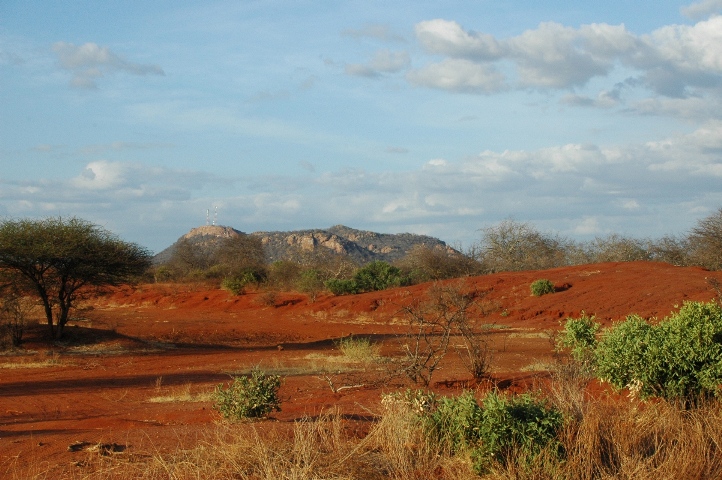
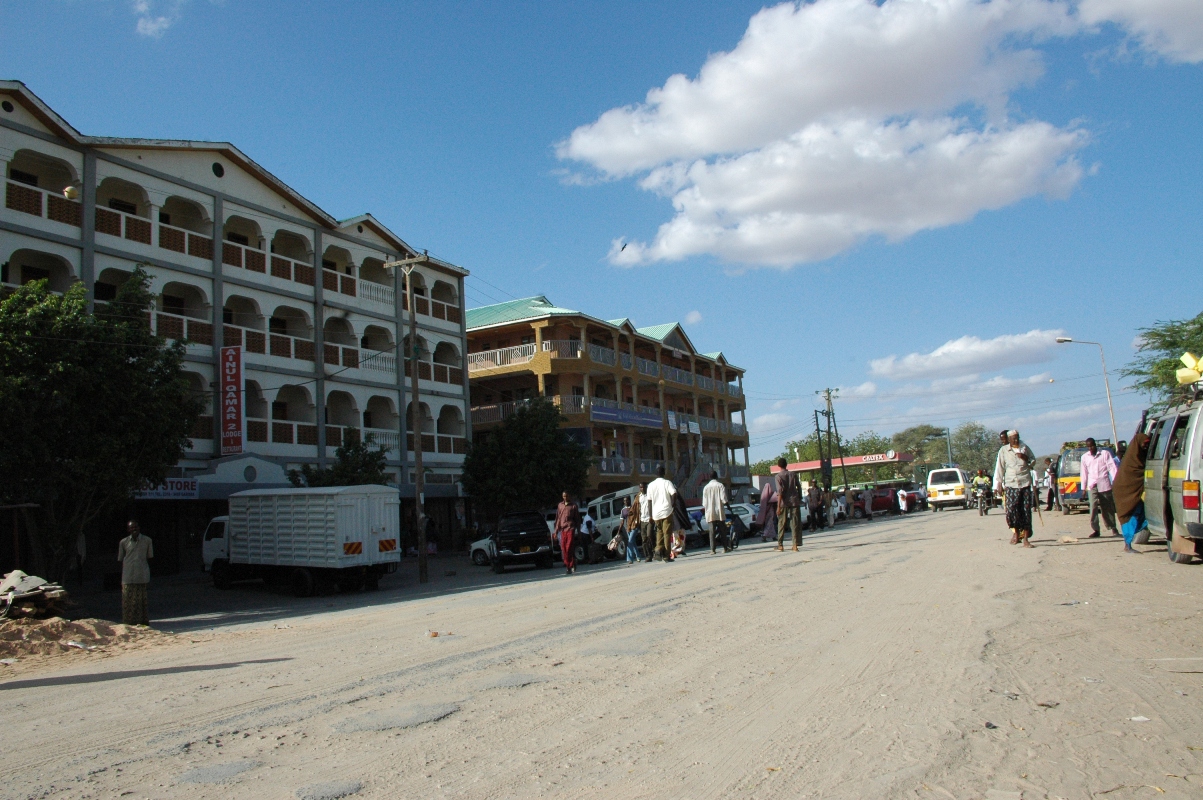
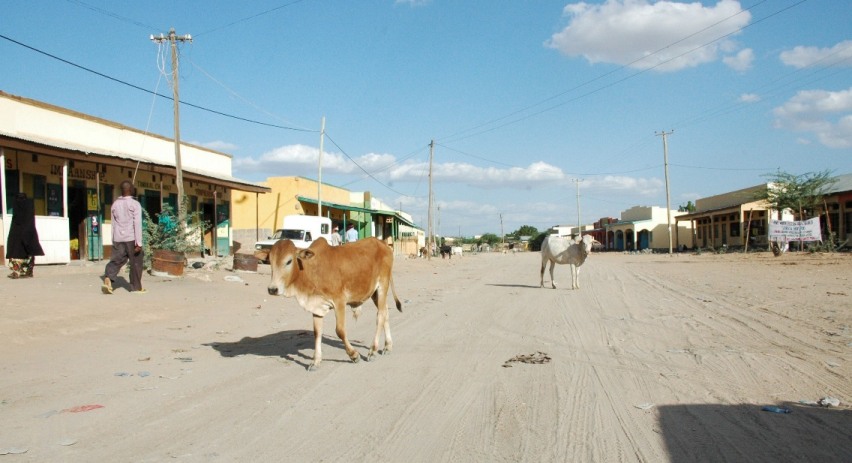
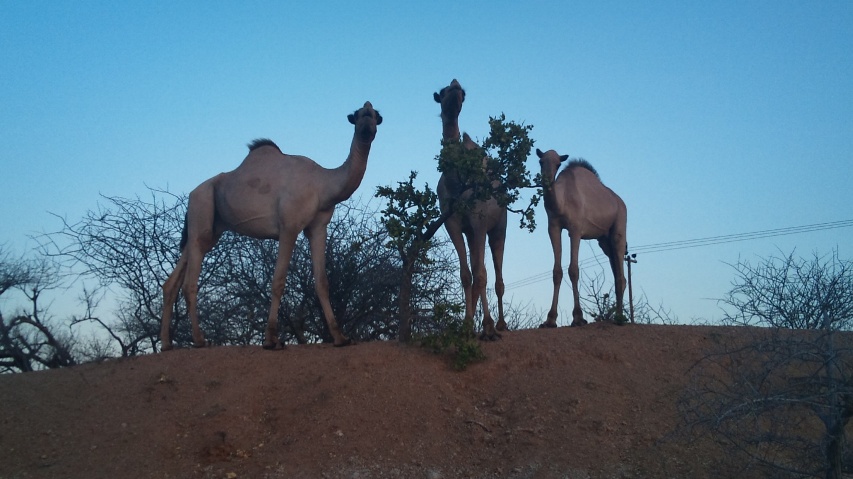
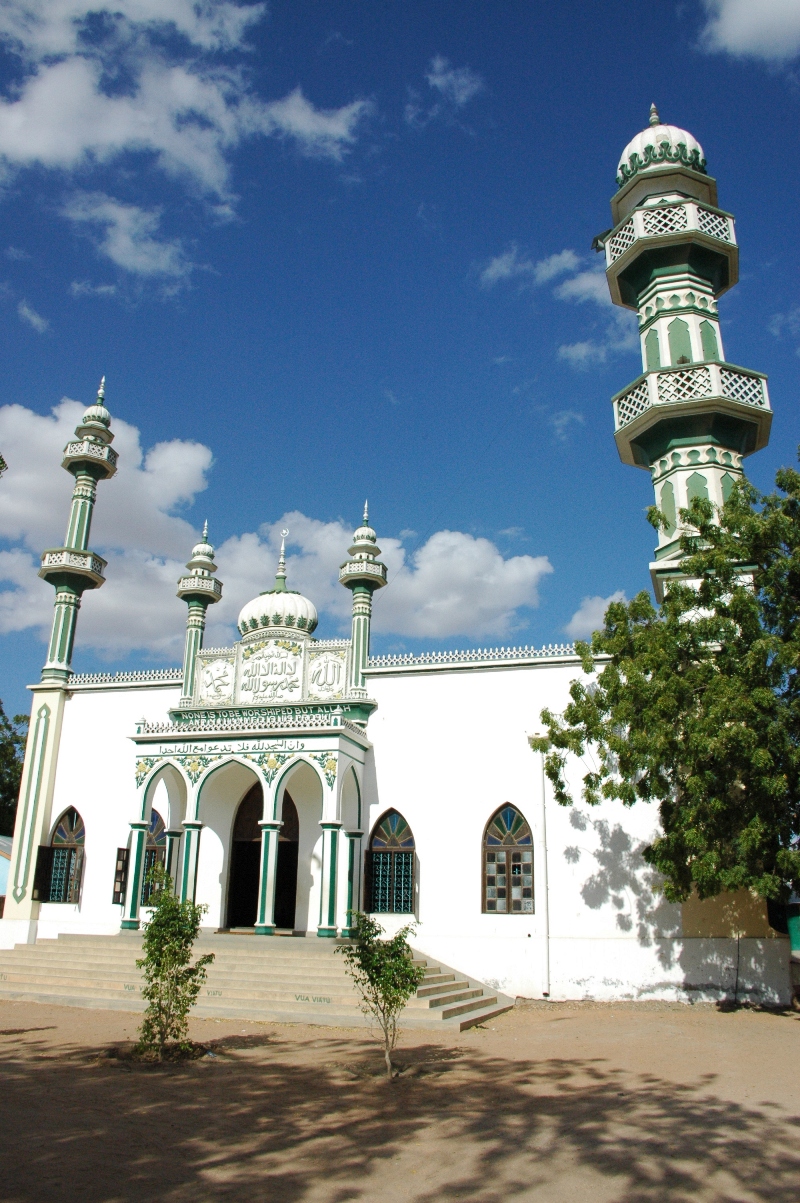
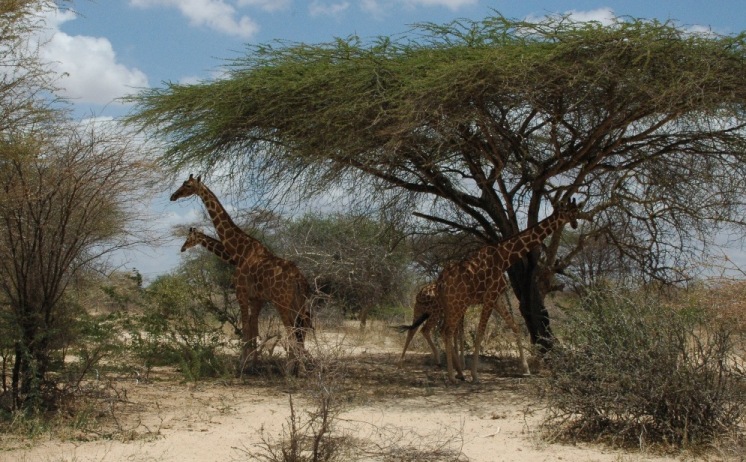
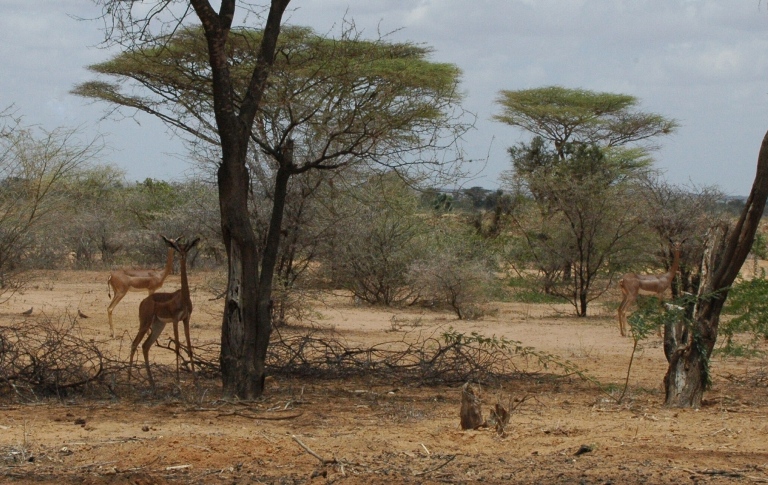
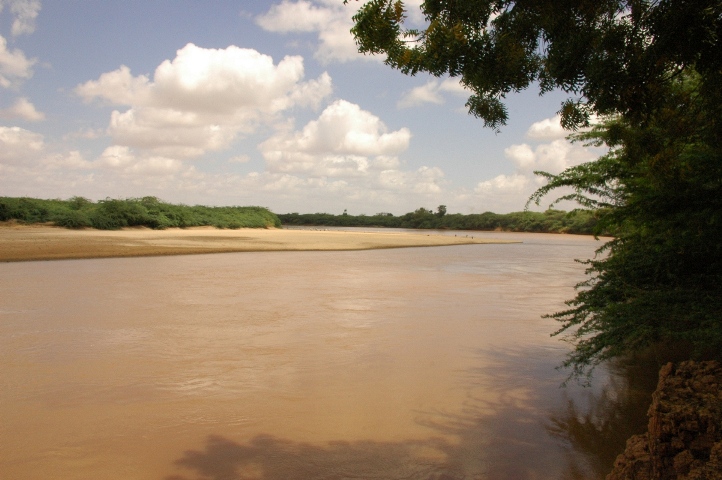
Beautiful Horn of Africa: Garissa: The Largest City Between Nairobi and Mogadishu
Beautiful Horn of Africa: Garissa: The Largest City Between Nairobi and Mogadishu
By Adan Makina (cleanthehorn.com)
The City of Garissa in Kenya’s North Eastern Province (NEP) has been on the top list of the most peaceful cities in East and Central Africa for over twenty years. It is the provincial headquarter of NEP as well as the administrative center for Garissa District. Named after a riverine local Pokomo elder or farmer called Karisa, Garissa became a recognized settlement in 1936. Majority of the inhabitants of Garissa are ethnic Somalis. Besides subsistence and small scale farming and local business initiatives by urbanites, livestock raring remains the major sustainer of the region’s economy. From 1963 when Kenya became a sovereign republic until the late eighties, the region suffered tremendous insecurity resulting from recurring banditry, poaching, and cattle-rustling.
However, according to Kenya government figures, Garissa District has continuously for years recorded the highest concentration of livestock in East and Central Africa. Traders in Garissa get their surplus livestock from Somalia’s southern regions consequently making Garissa a haven for livestock merchants primarily between the months of January and April when the volume of cattle substantially increases. Cattle trading in Garissa attract traders from as far as Machakos, Nairobi, Nyeri, Mombasa and other coastal towns during this time of the year consequently transforming the city into a beehive of activity. Despite generating enough revenue from the taxation of cattle sales, Garissa city has lagged behind other cities of Kenya in all aspects of development. The district’s markets in southern Somalia include Baidoa, Dinsor, Qorioley, Jowhar, Afgoi, Salagle, Bardhere and Afmadow, among others. However, anecdotal evidence suggests that 60-80% of livestock in Garissa originate from the Somali region in Ethiopia, Somalia, and other divisions with NEP.
In the past, the district experienced remarkable government involvement after health concerns related to the epidemiological outbreaks of Rinderpest (cattle plague or steppe murrain) and other devastating foot and mouth diseases necessitated in the enforcement of veterinary regulations, consequently and at times, leading to closure of cattle markets.
Despite being the major supplier of beef to major cities in Kenya and to as far as Tanzania and despite being the largest city between Nairobi and Mogadishu, Garissa greets its visitors with grim reality. With the exception of a teachers’ training college and one Islamic school founded by mindful businessmen and overseas-based organizations, the city has no university; it has no feasible infrastructure; the only visible tarmac located in the city center measures a few kilometers; its dusty potholed streets transform into lakes during rainy seasons; the municipality and the city council have no refuse collection systems in place thus making inhabitants susceptible to waterborne and airborne diseases; it has no manufacturing industries; unemployment is rife; drug addiction among the youth continues to skyrocket; poverty, beggary, and street children remain an eyesore and a social menace, and worst of all poor land allocation strategies riddled with corruption has been the major cause of civil skirmishes among the tribal-minded inhabitants resulting in government application of emergency laws such as extended curfews and deployment of the dreaded General Service Unit (GSU) together with the rapid Deployment Unit (RDU) to quell disturbances.
The city has a long history of election rigging; harassment of electors and opposition groups is common-dirty tricks and techniques inherited from past fallen autocratic regimes. Just like their cousins across the border, Somalis in Garissa and other parts of NEP have over and over again championed clan domineering approaches by unconventional means especially by rampant warring and ethnic animosities. Reminiscent of Somalia’s “Guulwadeyaasha” or revolutionary youth during the military junta, Kenyatta and Moi era governments relied on a force that recklessly represented the Kenya African National Union (KANU) Party-a consortium of embellished, underfunded youth wingers whose arguments rested on the just war doctrine of “kill or be killed”. Such political plunders ensured the uninterrupted reclamation of political structure and extension of inheritance for the old guards.
The trouncing of Moi’s single-party regime and the birth of multiparty democracy in 1992 did little to alter the pervasiveness of past odious events. In fact it exacerbated the political scenario when new contestants found their ambitions obstructed by the same old guards who jumped on the bandwagon using the same old tricks inherited from their past masters of deception.
The district has suffered poor county and parliamentary representation since Kenya’s attainment of independence in 1963. The reason the region is underperforming is due to the government's discriminatory practices of allocating resources, unfair distribution of wealth, outright marginalization of the people who inhabit the land, and diversion of funds earmarked for the region to other more prosperous regions.
Ironically, because of their adroitness at accumulating wealth, majority of the region’s uneducated councilors and parliamentarians have promoted their self-esteem and thus harbor elitist mentality such that even those who bowed out of politics remain a force to reckon with. These men have the power to imprison, kill or regain one’s freedom. While the poor suffer dental decay due to unhygienic eating habits coupled with shortage of dentists, the uneducated honorable parliamentarian or councilor displays sparkling white teeth because of abundance of money at his disposal. For a long time, stealing from state treasury has been a hallmark of African politics and Kenya, because of its corruption ranking profile, is no exception.
The Offspring of a Snake is a Snake
The above phrase is a translation of the Kiswahili saying “mtoto wa nyoka ni nyoka”. It has been used by corrupt Kenya leaders as a rallying cry to provoke non-Somalis to hate and oppress Kenya-Somalis. The saying inspired Kenya leaders after the succession of past Somali governments instigated political irredentism and supported the repossession of what used to be the Northern Frontier District (NFD) from the Republic of Kenya. This idiomatic expression and phraseologically provocative aphorism applied to almost every Kenyan-Somali and that its widespread use slackened only after the collapse of the Somali central government in 1991. The bitter territorial dispute that kicked-off between Kenya and Somalia in the 60s has gone down in history as the “Shifta War”. The word Shifta (or “shufta”) implies a bandit, outlaw, or rebel. The name became an allusion and nom de guerre for every Kenyan-Somali regardless of whether one was a law-abiding citizen or a contextually sadistic law-breaking criminal.
Thus, Kenya-Somalis saw themselves wedged between two diametrically opposed forces with profound conflicting ideologies-one a civilian authoritarian government (Kenya) with western inclinations and a dictatorial regime (Somalia) -espousing a plethora of political dimensions.
Thousands of families lacking guidance or controlling force or influence crossed the border into Somalia to escape rampant hostilities on the Kenya side. Leaders of the Northern Province People’s Progressive Party (NPPP) incorporated Somalis of diverse clans, Borana, Rendille, and others.
For decades, Garissa had been under the radar of Kenya security and intelligence agencies primarily because the region was under martial law decreed immediately after Kenya’s proclamation of independence. Besides the insecurity that came with the shifta menace, widespread illegal poaching by Somalis scavenging for better living conditions decimated-if not-drastically reduced wildlife concentration in Kenya’s internationally-acclaimed national parks and game reserves. Besides the hazards of wildlife plundering, poachers stealthily brought with them dangerous small arms that endangered the lives of government game wardens whose task implied the protection of wild game and the preservation of Kenya’s vigorous tourist industry. Since independence and till this day, tourism has been a cornerstone and sustainer of Kenya’s economy. The best the Kenya government can do for the moment and in the future is to fully integrate Kenya-Somalis and give them a share of the national cake.
However, according to Kenya government figures, Garissa District has continuously for years recorded the highest concentration of livestock in East and Central Africa. Traders in Garissa get their surplus livestock from Somalia’s southern regions consequently making Garissa a haven for livestock merchants primarily between the months of January and April when the volume of cattle substantially increases. Cattle trading in Garissa attract traders from as far as Machakos, Nairobi, Nyeri, Mombasa and other coastal towns during this time of the year consequently transforming the city into a beehive of activity. Despite generating enough revenue from the taxation of cattle sales, Garissa city has lagged behind other cities of Kenya in all aspects of development. The district’s markets in southern Somalia include Baidoa, Dinsor, Qorioley, Jowhar, Afgoi, Salagle, Bardhere and Afmadow, among others. However, anecdotal evidence suggests that 60-80% of livestock in Garissa originate from the Somali region in Ethiopia, Somalia, and other divisions with NEP.
In the past, the district experienced remarkable government involvement after health concerns related to the epidemiological outbreaks of Rinderpest (cattle plague or steppe murrain) and other devastating foot and mouth diseases necessitated in the enforcement of veterinary regulations, consequently and at times, leading to closure of cattle markets.
Despite being the major supplier of beef to major cities in Kenya and to as far as Tanzania and despite being the largest city between Nairobi and Mogadishu, Garissa greets its visitors with grim reality. With the exception of a teachers’ training college and one Islamic school founded by mindful businessmen and overseas-based organizations, the city has no university; it has no feasible infrastructure; the only visible tarmac located in the city center measures a few kilometers; its dusty potholed streets transform into lakes during rainy seasons; the municipality and the city council have no refuse collection systems in place thus making inhabitants susceptible to waterborne and airborne diseases; it has no manufacturing industries; unemployment is rife; drug addiction among the youth continues to skyrocket; poverty, beggary, and street children remain an eyesore and a social menace, and worst of all poor land allocation strategies riddled with corruption has been the major cause of civil skirmishes among the tribal-minded inhabitants resulting in government application of emergency laws such as extended curfews and deployment of the dreaded General Service Unit (GSU) together with the rapid Deployment Unit (RDU) to quell disturbances.
The city has a long history of election rigging; harassment of electors and opposition groups is common-dirty tricks and techniques inherited from past fallen autocratic regimes. Just like their cousins across the border, Somalis in Garissa and other parts of NEP have over and over again championed clan domineering approaches by unconventional means especially by rampant warring and ethnic animosities. Reminiscent of Somalia’s “Guulwadeyaasha” or revolutionary youth during the military junta, Kenyatta and Moi era governments relied on a force that recklessly represented the Kenya African National Union (KANU) Party-a consortium of embellished, underfunded youth wingers whose arguments rested on the just war doctrine of “kill or be killed”. Such political plunders ensured the uninterrupted reclamation of political structure and extension of inheritance for the old guards.
The trouncing of Moi’s single-party regime and the birth of multiparty democracy in 1992 did little to alter the pervasiveness of past odious events. In fact it exacerbated the political scenario when new contestants found their ambitions obstructed by the same old guards who jumped on the bandwagon using the same old tricks inherited from their past masters of deception.
The district has suffered poor county and parliamentary representation since Kenya’s attainment of independence in 1963. The reason the region is underperforming is due to the government's discriminatory practices of allocating resources, unfair distribution of wealth, outright marginalization of the people who inhabit the land, and diversion of funds earmarked for the region to other more prosperous regions.
Ironically, because of their adroitness at accumulating wealth, majority of the region’s uneducated councilors and parliamentarians have promoted their self-esteem and thus harbor elitist mentality such that even those who bowed out of politics remain a force to reckon with. These men have the power to imprison, kill or regain one’s freedom. While the poor suffer dental decay due to unhygienic eating habits coupled with shortage of dentists, the uneducated honorable parliamentarian or councilor displays sparkling white teeth because of abundance of money at his disposal. For a long time, stealing from state treasury has been a hallmark of African politics and Kenya, because of its corruption ranking profile, is no exception.
The Offspring of a Snake is a Snake
The above phrase is a translation of the Kiswahili saying “mtoto wa nyoka ni nyoka”. It has been used by corrupt Kenya leaders as a rallying cry to provoke non-Somalis to hate and oppress Kenya-Somalis. The saying inspired Kenya leaders after the succession of past Somali governments instigated political irredentism and supported the repossession of what used to be the Northern Frontier District (NFD) from the Republic of Kenya. This idiomatic expression and phraseologically provocative aphorism applied to almost every Kenyan-Somali and that its widespread use slackened only after the collapse of the Somali central government in 1991. The bitter territorial dispute that kicked-off between Kenya and Somalia in the 60s has gone down in history as the “Shifta War”. The word Shifta (or “shufta”) implies a bandit, outlaw, or rebel. The name became an allusion and nom de guerre for every Kenyan-Somali regardless of whether one was a law-abiding citizen or a contextually sadistic law-breaking criminal.
Thus, Kenya-Somalis saw themselves wedged between two diametrically opposed forces with profound conflicting ideologies-one a civilian authoritarian government (Kenya) with western inclinations and a dictatorial regime (Somalia) -espousing a plethora of political dimensions.
Thousands of families lacking guidance or controlling force or influence crossed the border into Somalia to escape rampant hostilities on the Kenya side. Leaders of the Northern Province People’s Progressive Party (NPPP) incorporated Somalis of diverse clans, Borana, Rendille, and others.
For decades, Garissa had been under the radar of Kenya security and intelligence agencies primarily because the region was under martial law decreed immediately after Kenya’s proclamation of independence. Besides the insecurity that came with the shifta menace, widespread illegal poaching by Somalis scavenging for better living conditions decimated-if not-drastically reduced wildlife concentration in Kenya’s internationally-acclaimed national parks and game reserves. Besides the hazards of wildlife plundering, poachers stealthily brought with them dangerous small arms that endangered the lives of government game wardens whose task implied the protection of wild game and the preservation of Kenya’s vigorous tourist industry. Since independence and till this day, tourism has been a cornerstone and sustainer of Kenya’s economy. The best the Kenya government can do for the moment and in the future is to fully integrate Kenya-Somalis and give them a share of the national cake.
Friday, October 1, 2010
Daily Nation:�- Business News�|Northern Kenya to get tourism hype
Daily Nation:�- Business News�|Northern Kenya to get tourism hype


BUSINESS NEWS
Northern Kenya to get tourism hype


A digital village in Garissa, northern Kenya. The region has diverse tourism products whose potential has not been exploited. Photo/FREDRICK ONYANGO
By NATION REPORTER
Posted Tuesday, September 28 2010 at 13:16
Posted Tuesday, September 28 2010 at 13:16
Garissa and the northern parts of the country are set to earn from tourism after the Kenya Tourist Board (KTB) announced a major marketing strategy to open up the region to both domestic and international visitors.
Managing director Muriithi Ndegwa in a speech read on his behalf by regional manager Fred Okeyo said that communities within the northern circuit should now identify more tourism products for competitive marketing following the creation of counties.
He said the country has diverse tourism products whose potential has not been exploited adding that the community has the responsibility to identify these unique products for marketing.
This was during a workshop at a hotel in Garissa aimed at sensitising stakeholders on potential tourism offers in the northern part of Kenya as part of this year’s tourism day celebration.
He said KTB will now focus on marketing strategies such as on-line, print, electronic media and other social interactive platforms to raise the profile of the northern circuit.
The larger district has several tourism products including wildlife, culture and scenery among other products.
Last week while opening Garissa tourism regional office, Tourism minister Najib Balala announced that Kenya Utalii College will organise tailor-made courses for local hotels in the region to equip personnel with the required skills.
Saturday, September 25, 2010
Govt to market North Eastern kenya
Govt to market North Eastern Kenya
Written By:Kamau Mbote, Posted: Fri, Sep 24, 2010
The government plans to make North Eastern a tourism hub to showcase its cultural diversity and unique tourist products.
Speaking to Kenya Broadcasting Corporation, Assistant Minister for Tourism Cecile Mbarire says the ministry is diversifying from the known safari and beach attractions to encourage more local and foreign tourists.
Kenya is best known internationally for its wildlife and white sand beaches and less known for its desert scenery and camel rides in the deserts.
According to the ministry of tourism this will be the new approach that the government will be taking to encourage more tourists in the area and uplift the living standard of the north eastern people.
The ministry is aiming to maximize on the potential of the Lamu-Ethiopia highway that will be passing through Garissa town.
Mbarire says Garissa can then be used as a transit town for business men and investors thereby showcasing its products and earning the local community a living by supplying meat and agricultural products to hotels and resorts.
The ministry also aims at working with the counties entrenched in the new constitution to develop tourism by formulating policies that favor tourism nationally, while counties will be allowed to come up with new innovative products.
Among activities that are set for this week include workshops to teach communities on eco and cultural tourism, tree planting, public events and a carnivore around Garissa town.
Written By:Kamau Mbote, Posted: Fri, Sep 24, 2010
The government plans to make North Eastern a tourism hub to showcase its cultural diversity and unique tourist products.
Speaking to Kenya Broadcasting Corporation, Assistant Minister for Tourism Cecile Mbarire says the ministry is diversifying from the known safari and beach attractions to encourage more local and foreign tourists.
Kenya is best known internationally for its wildlife and white sand beaches and less known for its desert scenery and camel rides in the deserts.
According to the ministry of tourism this will be the new approach that the government will be taking to encourage more tourists in the area and uplift the living standard of the north eastern people.
The ministry is aiming to maximize on the potential of the Lamu-Ethiopia highway that will be passing through Garissa town.
Mbarire says Garissa can then be used as a transit town for business men and investors thereby showcasing its products and earning the local community a living by supplying meat and agricultural products to hotels and resorts.
The ministry also aims at working with the counties entrenched in the new constitution to develop tourism by formulating policies that favor tourism nationally, while counties will be allowed to come up with new innovative products.
Among activities that are set for this week include workshops to teach communities on eco and cultural tourism, tree planting, public events and a carnivore around Garissa town.
Thursday, September 16, 2010
Business Daily: �- Northern Kenya deserves attention
Ibrahim Mwathane
Northern Kenya deserves attention
Please look out and tell me what you see below,” I asked my Burundian friend as we entered Kenyan airspace from a Trans-Atlantic journey.
“Nothing. Just darkness”, she said.
“That’s the northern part of my country. Looks like it’s uninhabited, doesn’t it, compared to what we saw while overflying America and Europe at night. Yet it forms a major part of my country”, I told her.
As if to vindicate, the space below suddenly lit up as we approached Nakuru and proceeded through Naivasha to Nairobi.
The neat darkness was gone. Rather humbling. This undeveloped North challenges our national economy and business enterprise.
After six years, I returned to Garissa, provincial town, Northern Kenya. End of tarmac. To Isiolo, Wajir and Mandera is a very rough road.
And the many extras we take for granted out here in “ developed Kenya” are scant.
I for instance remember newspaper vendors bursting into laughter when I asked for a newspaper at about 12 noon.
“Not yet arrived”, they told me.
Six years back, they’d just shaken their heads, amused and in disbelief when I made a similar request at about 8 am.
I thought things must have improved. Not at all. Residents read rather stale news here.
Challenges in aspects like entertainment, accommodation and travel are galore.
Yet Garissa, compared to the wider arid North, is modern and well connected to “Kenya”.
But in many aspects, the town is fighting back admirably. It’s growing. The skyline, given what I had seen earlier, has changed.
New and higher commercial buildings have come up.
And numerous modern residential units have mushroomed all around.
Garissa will soon force itself to national attention.
But we need to be more proactive about its growth and its central role.
We must remember that it provides co-ordination and entry to the rather “dark North”, the Kenya we need to reclaim.
Reminds me of the book, “Confessions of an Economic Hit Man”, where author John Perkins observes how in the ‘70s , America helped to transform the desert Oil Kingdom of Saudi Arabia into a modern Industrialised Nation.
Through massive investments of capital and technology, shopping malls, housing complexes, hospitals, water and sewerage, communication, electrical and transport networks replaced the once archaic systems of the Kingdom.
Of course, the take for America too was immense. But the lesson here is that our arid North can be turned around.
If America, limited by distance and language, could achieve such a feat in under a decade, what about us?
With a common language, fairly short distances and compelling national reasons, we should transform our North.
That is why the President’s Madaraka Day speech indicating that feasibility studies are on going for a railway network to connect the Indian Ocean port of Lamu to Isiolo and Juba in Southern Sudan with a link from Isiolo to Moyale to connect Ethiopia to promote tourism, trade and investments must be lauded.
These plans should incorporate modern highways and an oil pipeline alongside.
And Garissa must be connected too. It is gratifying to note that the Vision 2030 sectoral plan for Lands 2008-2012 incorporates plans to source land for this important transport corridor.
The recent pronouncement allocating Sh4.2 billion for the development of roads to open up Isiolo as a Resort City by the Finance Minister in the 2010/11 budget also aligns well to developing Northern Kenya.
Those keen on tapping the latent business opportunities from irrigation agriculture, livestock production, real estate, the provision of service infrastructure and oil exploration in this area must therefore gear up early.
Makes good business sense.
Northern Kenya deserves attention
Please look out and tell me what you see below,” I asked my Burundian friend as we entered Kenyan airspace from a Trans-Atlantic journey.
“Nothing. Just darkness”, she said.
“That’s the northern part of my country. Looks like it’s uninhabited, doesn’t it, compared to what we saw while overflying America and Europe at night. Yet it forms a major part of my country”, I told her.
As if to vindicate, the space below suddenly lit up as we approached Nakuru and proceeded through Naivasha to Nairobi.
The neat darkness was gone. Rather humbling. This undeveloped North challenges our national economy and business enterprise.
After six years, I returned to Garissa, provincial town, Northern Kenya. End of tarmac. To Isiolo, Wajir and Mandera is a very rough road.
And the many extras we take for granted out here in “ developed Kenya” are scant.
I for instance remember newspaper vendors bursting into laughter when I asked for a newspaper at about 12 noon.
“Not yet arrived”, they told me.
Six years back, they’d just shaken their heads, amused and in disbelief when I made a similar request at about 8 am.
I thought things must have improved. Not at all. Residents read rather stale news here.
Challenges in aspects like entertainment, accommodation and travel are galore.
Yet Garissa, compared to the wider arid North, is modern and well connected to “Kenya”.
But in many aspects, the town is fighting back admirably. It’s growing. The skyline, given what I had seen earlier, has changed.
New and higher commercial buildings have come up.
And numerous modern residential units have mushroomed all around.
Garissa will soon force itself to national attention.
But we need to be more proactive about its growth and its central role.
We must remember that it provides co-ordination and entry to the rather “dark North”, the Kenya we need to reclaim.
Reminds me of the book, “Confessions of an Economic Hit Man”, where author John Perkins observes how in the ‘70s , America helped to transform the desert Oil Kingdom of Saudi Arabia into a modern Industrialised Nation.
Through massive investments of capital and technology, shopping malls, housing complexes, hospitals, water and sewerage, communication, electrical and transport networks replaced the once archaic systems of the Kingdom.
Of course, the take for America too was immense. But the lesson here is that our arid North can be turned around.
If America, limited by distance and language, could achieve such a feat in under a decade, what about us?
With a common language, fairly short distances and compelling national reasons, we should transform our North.
That is why the President’s Madaraka Day speech indicating that feasibility studies are on going for a railway network to connect the Indian Ocean port of Lamu to Isiolo and Juba in Southern Sudan with a link from Isiolo to Moyale to connect Ethiopia to promote tourism, trade and investments must be lauded.
These plans should incorporate modern highways and an oil pipeline alongside.
And Garissa must be connected too. It is gratifying to note that the Vision 2030 sectoral plan for Lands 2008-2012 incorporates plans to source land for this important transport corridor.
The recent pronouncement allocating Sh4.2 billion for the development of roads to open up Isiolo as a Resort City by the Finance Minister in the 2010/11 budget also aligns well to developing Northern Kenya.
Those keen on tapping the latent business opportunities from irrigation agriculture, livestock production, real estate, the provision of service infrastructure and oil exploration in this area must therefore gear up early.
Makes good business sense.
Wednesday, September 15, 2010
The Standard | Online Edition :: Eastleigh's illegal DSTV Business
The Standard | Online Edition :: Two convicted for illegal sale of DSTV signals
Two convicted for illegal sale of DSTV signals
Published on 09/09/2010
Related Stories
 Competition gets stiffer in the Pay TV market
DSTV launch ‘Once in a lifetime WC coverage
By Wahome Thuku
Police in Nairobi have dismantled a racket involving illegal connection and distribution of signals belonging to a broadcasting firm.
Two men involved in the scheme were on Thursday charged and fined Sh800,000 or face two years in jail. They were convicted after accepting the charges.
The racket, which has been flourishing in several city estates, entails linking numerous homes to a few legally acquired satellite dishes to enable beneficiaries illegally access paid up services.
One satellite dish is illegally connected to more than 200 households at a fee of Sh1,000 per month each.
The two men, Habane Mohammed Abdi and Addirizak Mohammed Gelle were arrested for distributing DSTV signals in Eastleigh area in the outskirts of the city centre and infringing on the copyright of Multichoice Kenya.
They were arrested on Wednesday at Eastleigh Sixth Street, 2nd Avenue where they had linked two satellite dishes to more than seven blocks of residential flats.
Investigators traced numerous cables running from one house to various adjacent premises.
They entered the house and arrested the two men, one of whom was not a Kenyan. They also recovered two satellite dishes, 23 decoders, video disc players, amplifiers, nine modulators, 19 remote controllers, a TV set and other related gadgets.
The two were charged before Principle Magistrate Grace Macharia with two counts of distributing infringed broadcast signals and being in possession of equipment for the transmission, contrary to the Copyright Act.
They pleaded guilty and asked the court for leniency. But Ms Macharia said the offence was serious as the accused were harvesting where they did not sow. She ordered each to pay Sh200,000 for each count.
Subscribe to:
Posts (Atom)